A History of Cosmetics; Part 1 of 3
Sunday, September 22, 2024
The cosmetic industry is booming with billions of dollars spent worldwide each year. Have you ever wondered how we got to this point? It's become a daily routine to apply layers of makeup before stepping out the door. But this practice didn't just appear overnight. It's a result of a historical evolution and a blend of past influences.
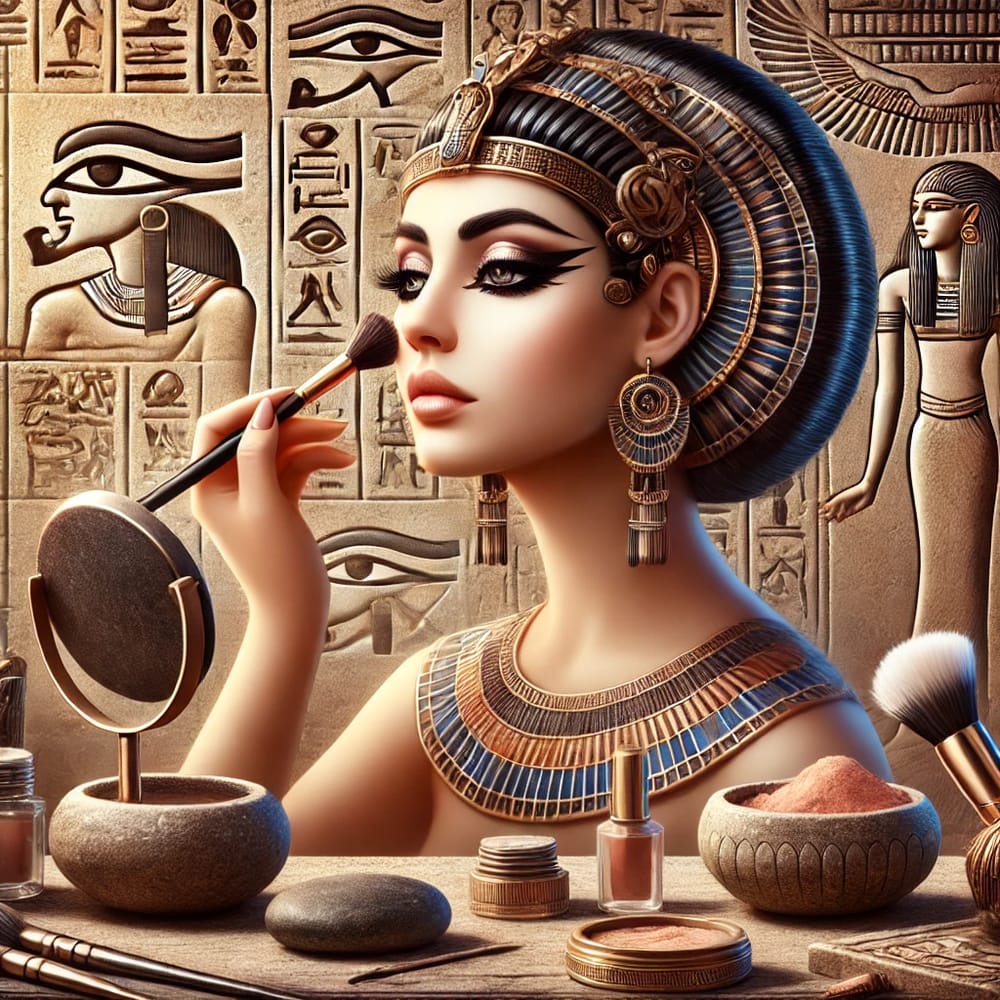
Over four thousand years ago, the Egyptians placed great importance on cleanliness and appearance, believing that one's outer appearance was connected to the health of the soul. Their society valued looking and smelling good, leading individuals to stand out.
The innovative Egyptians used cosmetics not only for enhancing their appearance but also for practical and symbolic purposes beyond mere vanity.
The earliest form of eye shadow, Mesdemet, was crafted from copper and lead ore. Believing in its protective qualities, ancient users applied dark shades to ward off evil spirits. Additionally, it served as both a disinfectant and insect repellant. Kohl, another popular cosmetic, consisted of a mixture of lead, ash, ochre, copper, and burnt almonds, applied around the eyes in an oval shape. To further enhance their beauty, they adorned their cheekbones with a mixture of water and red clay and colored their nails with hues of orange and yellow using henna.
As cultures began to intersect more frequently, the Greeks adopted many cosmetic practices from the Egyptians. They used a foundation containing lead to achieve a pale complexion, a choice that unfortunately led to fatal consequences. Similarly, the Romans embraced cosmetics, shifting the focus of beauty away from functionality towards more extravagant and exotic methods.
Roman women painted their nails using a mixture of sheep's blood and cooked body fat, reflecting a societal sentiment captured in the phrase, "A woman without paint is like food without salt."